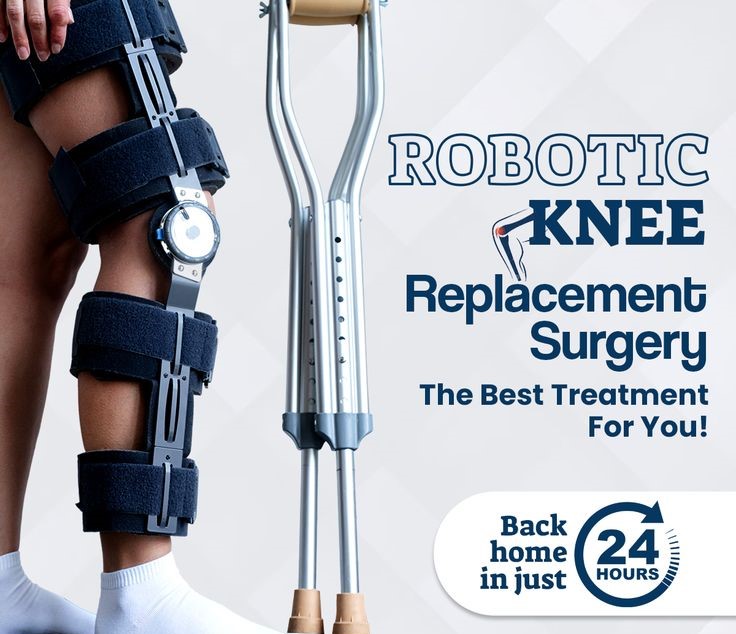
Arthritis, cartilage wear, or joint degeneration in the knees can lead to reduced mobility, freedom, and quality of life for an individual. For many patients, knee replacement has become the most viable long-term option when conservative treatments offer no relief. Today, with advances in medical science, there is a more accurate and patient-friendly approach known as robotic knee replacement. As opposed to conventional surgery, this method melds the experience of a surgeon with the unparalleled precision of robotic technology.
However, the success of robotic knee replacement depends not only on technology, but also on the specialist performing it. Deciding upon the right robotic knee replacement surgeon is one of the most critical decisions a patient can make prior to surgery.
The Role of the Specialist in Robotic Surgery
Robotic-assisted knee replacement is not an automated surgery. The robot does not independently perform the operation. Instead, the robotic arm works as an advanced tool—controlled entirely by the surgeon. The result of the procedure is determined by the skill, experience, and surgical judgment of the surgeon.
A robotic knee replacement specialist:
- Understands advanced navigation and 3D mapping technology
- Is trained to make micro-level adjustments during the surgery.
- Tailors the implant positioning according to the anatomy of each patient.
- The more experienced the specialist, the smoother and more accurate the surgery is.
Why Choosing the Right Specialist Makes a Difference
1. Precision Beyond Conventional Techniques
Although robotic systems assist with the process of alignment and planning, every step is guided by the specialist. A trained surgeon knows how to use the technology to optimize bone cuts, balance ligaments precisely, and ensure ideal alignment. A well-balanced knee means natural movement, less pain, and better implant longevity.
2. Personalised Treatment Planning
Not every knee is the same. The robotic knee replacement expert knows how to interpret real-time data and bone mapping to decide:
- How much bone to shave
- Which implant size fits best?
- How to balance the soft tissues for smooth movement
It ensures superior comfort and performance following surgery with a personalized approach.
3. Lower Risk of Complications
Sensitive procedures are carried out by a highly trained specialist to the last detail, minimizing risks such as:
- Implant misalignment
- Soft-tissue injury
- Infection
- Persistent postoperative pain
The correct placement of the implant is important in ensuring long-term success, something deeply influenced by the surgeon’s experience.
4. Faster Recovery and Return to Activities
Patients treated by experienced robotic surgeons often report:
- Early mobility
- Shorter hospital stays
- Reduced post-operative pain
- Faster return to routine and sports activities
This is because a smooth rehabilitation process can be ensured with precise surgical cuts and minimal soft-tissue disruption.
5. Prolonging Implant Life
Robotic technology helps achieve perfect implant alignment, but that accuracy depends on the judgment and expertise of the operating surgeon. When both alignment and ligament balancing are correctly achieved, the implant wears more evenly, thus increasing its durability and reducing the chances of revision surgery in the future.
6. Expertise in Handling Complex Cases
Patients with:
- Bone deformity
- Severe arthritis
- Previous knee surgeries
- Sports injuries
Require advanced surgical expertise. A robotic knee replacement specialist is equipped to handle such cases safely and effectively where conventional surgery might be challenging.
7. Improved Patient Satisfaction
Ultimately, the aim of knee replacement is to restore comfort, mobility, and confidence in movement. Generally, patients treated by robotic knee specialists achieve the following:
- More natural knee motion
- Improved comfort in bending and squatting
- Increased confidence in walking, using stairs, and exercising
- This leads to a happier postoperative experience and an improved quality of life.
- How to identify a qualified robotic knee replacement specialist:
Patients should look for:
✔ Fellowship or specialized training in joint replacement or robotic knee surgery
✔ Strong track record of experience with successful robotic procedures
✔ Expertise in knee and lower-limb biomechanics
✔ Satisfied patient testimonials and outcomes
✔ Knowledge updated on the latest surgical technology
Conclusion
When these factors come into play, patients can enjoy very predictable and successful results. Conclusion Robotic knee replacement is one of the most advanced and patient-friendly treatments available for severe knee pain. However, the technology alone cannot be sufficient. The experience and expertise of the robotic knee replacement specialist have the biggest role in achieving a flawless outcome. Choosing the right surgeon means precise implant placement, minimal tissue damage, quick recovery, less complication, and long-lasting comfort and mobility. When considering robotic knee replacement, selecting a specialist you can truly trust and who has extensive experience will make all the difference. Dr. Saurabh Giri is a renowned Pune-based Joint Replacement and Arthroscopy Specialist with expertise in knee, hip, and sports injury surgeries. A premier robotic knee replacement surgeon, he has been able to successfully administer the latest surgical technology to his patients.
Recent Posts
-
 Ignoring Advanced Surgical Options While Robotic Knee Replacement Continues Becoming the Future of Joint Care
 -
 Not because the pain was manageable, but because he was afraid of surgery.
 -
 Still Worried About Long Recovery Periods and Limited Mobility After Knee Replacement Surgery
 -
 Why Traditional Knee Surgery Is Gradually Losing Preference in the Era of Robotic Orthopedic Procedures
 -
 Afraid of Knee Replacement Surgery Due to Fear of Pain, Recovery Time, and Surgical Complications