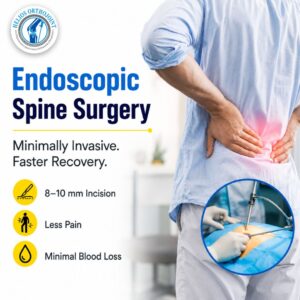
Advanced Minimally Invasive Spine Surgery in Pune
Endoscopic Spine Surgery is an advanced minimally invasive procedure designed to treat spinal disorders through a small incision using a high-definition endoscope. This modern technique enables surgeons to access the affected area with greater precision while preserving healthy muscles, ligaments, and surrounding tissues.
Compared to traditional open spine surgery, endoscopic procedures result in less pain, minimal blood loss, smaller scars, and a faster recovery. It is an effective treatment option for conditions such as herniated discs, spinal stenosis, and degenerative spine disorders when conservative treatments no longer provide relief.
At Helios Orthojoint, our goal is to provide safe, effective, and personalized spine care to help patients regain mobility and return to their daily activities with confidence.
Why Endoscopic Spine Surgery?
Endoscopic Spine Surgery has become a preferred treatment option because it combines advanced technology with minimally invasive techniques. The procedure focuses on treating the root cause of spinal pain while minimizing damage to healthy tissues.
Why Patients Choose Endoscopic Spine Surgery
- Small incision with minimal scarring
- Reduced muscle and tissue damage
- Less postoperative pain
- Lower blood loss during surgery
- Reduced risk of infection
- Shorter hospital stay
- Faster recovery and rehabilitation
- Early return to work and daily activities
- High surgical precision using advanced endoscopic technology
Every patient is different, and the most appropriate treatment is determined after a thorough clinical evaluation and diagnostic imaging.
What Conditions Does Endoscopic Spine Surgery Treat?
Endoscopic Spine Surgery is recommended for patients experiencing persistent spinal pain caused by nerve compression or degenerative changes. It is commonly used to treat conditions affecting the neck and lower back while preserving the natural anatomy of the spine.
This minimally invasive procedure can effectively treat:
- Herniated (Slipped) Disc
- Spinal Stenosis
- Degenerative Disc Disease
- Sciatica
- Nerve Compression
- Selected Spinal Degenerative Disorders
A detailed assessment by a spine specialist helps determine whether endoscopic surgery is the most suitable treatment option.
Herniated Disc
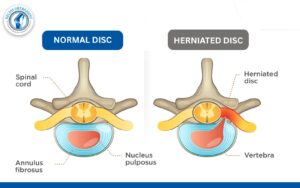
A herniated disc, commonly known as a slipped disc, occurs when the soft inner portion of a spinal disc protrudes through its outer layer and compresses nearby nerves. This pressure can cause persistent back or neck pain, numbness, tingling, and pain radiating to the arms or legs.
When non-surgical treatments such as medications, physiotherapy, and lifestyle modifications fail to relieve symptoms, Endoscopic Spine Surgery may be recommended. Using a small incision and specialized instruments, the surgeon removes the disc material pressing on the nerve while preserving healthy surrounding tissues.
The minimally invasive approach helps reduce pain, improve nerve function, and supports a quicker recovery compared to conventional open spine surgery.
Spinal Stenosis
Spinal stenosis is a condition in which the spinal canal becomes narrower, placing pressure on the spinal cord or nerve roots. It commonly develops due to age-related wear and tear, arthritis, thickened ligaments, or bone spurs. Patients may experience back pain, leg pain, numbness, tingling, muscle weakness, and difficulty walking or standing for long periods.
Endoscopic Spine Surgery helps relieve pressure on the affected nerves through a small incision, improving mobility while minimizing tissue damage and recovery time.
Degenerative Disc Disease
Degenerative Disc Disease occurs when the spinal discs gradually lose their flexibility and cushioning due to aging or repeated stress. As the discs wear down, they can cause chronic back pain, stiffness, reduced flexibility, and nerve compression.
Most patients benefit from conservative treatments such as medication and physiotherapy. However, when symptoms persist and interfere with daily life, Endoscopic Spine Surgery may be recommended to relieve nerve pressure and restore function with a minimally invasive approach.

Symptoms & When You May Need Surgery
Persistent spinal pain should never be ignored, especially if it affects your daily routine or quality of life. While many spine conditions improve with non-surgical treatments, surgery may be considered when symptoms continue despite conservative care.
Common Symptoms Include
- Persistent lower back or neck pain
- Pain radiating to the arms, hips, or legs
- Numbness or tingling in the hands or feet
- Muscle weakness in the arms or legs
- Difficulty walking or maintaining balance
- Pain while standing, sitting, or walking for long periods
- Reduced spinal flexibility or stiffness
- Sciatica (pain travelling down the leg)
- Symptoms that do not improve with medication or physiotherapy
- Difficulty performing everyday activities due to chronic pain
A timely consultation with a spine specialist can help identify the underlying cause and determine the most appropriate treatment.
Diagnosis Before Endoscopic Spine Surgery
Before recommending Endoscopic Spine Surgery, your spine specialist will perform a comprehensive evaluation to understand the exact cause of your symptoms. An accurate diagnosis is essential to develop a personalized treatment plan and determine whether minimally invasive surgery is the best option.
The diagnostic process typically includes:
- Detailed medical history and symptom assessment
- Physical and neurological examination
- Assessment of muscle strength, sensation, and reflexes
- Evaluation of posture and spinal movement
- Advanced imaging studies such as X-rays, CT scans, and MRI scans
- Review of previous treatments and response to conservative care
Based on these findings, your doctor will recommend the most suitable treatment approach to relieve pain and restore spinal function.
Clinical Evaluation
A thorough clinical evaluation is the first step in diagnosing spinal disorders. During the consultation, the spine specialist will review your medical history, discuss your symptoms, and perform a physical examination to determine the cause of your pain.
The evaluation may include:
- Assessment of back and neck pain
- Neurological examination to check muscle strength, reflexes, and sensation
- Evaluation of posture, spinal alignment, and range of motion
- Review of previous treatments and medical history
- Assessment of your daily activities and lifestyle
This comprehensive evaluation helps identify the underlying condition and determine whether Endoscopic Spine Surgery is the right treatment option.
X-ray
An X-ray is often the first imaging test used to evaluate the spine. It provides clear images of the bones and helps identify structural abnormalities that may be contributing to pain.
An X-ray can help detect:
- Spinal alignment issues
- Bone fractures
- Degenerative changes
- Bone spurs (osteophytes)
- Scoliosis and other spinal deformities
- Loss of disc space between vertebrae
Although X-rays do not show soft tissues such as discs and nerves, they provide valuable information for planning further investigations.
CT Scan
A Computed Tomography (CT) Scan produces detailed cross-sectional images of the spine, offering a more comprehensive view of the bones, joints, and surrounding structures.
A CT Scan is useful for diagnosing:
- Herniated or damaged discs
- Spinal canal narrowing (Spinal Stenosis)
- Bone abnormalities
- Spinal fractures
- Degenerative changes
- Complex spinal conditions requiring surgical planning
CT imaging helps surgeons better understand the anatomy of the spine and plan a precise, minimally invasive surgical approach.
MRI (Magnetic Resonance Imaging)
MRI is one of the most advanced diagnostic tools for evaluating spinal disorders. It provides highly detailed images of the spinal discs, nerves, spinal cord, ligaments, and surrounding soft tissues without using radiation.
MRI helps diagnose:
- Herniated discs
- Nerve compression
- Spinal stenosis
- Degenerative disc disease
- Spinal infections
- Tumors and other soft tissue abnormalities
MRI findings, combined with a clinical examination, help determine whether Endoscopic Spine Surgery is the most appropriate treatment for your condition.
Principles of Endoscopic Spine Surgery
Endoscopic Spine Surgery is based on the principle of treating the root cause of spinal pain while preserving healthy tissues. The procedure focuses on relieving pressure on compressed nerves, restoring spinal function, and minimizing surgical trauma through a minimally invasive approach.
The Key Principles Include:
- Precise Nerve Decompression: Removing the tissue or disc material compressing the spinal nerves to relieve pain and neurological symptoms.
- Minimal Tissue Damage: Preserving healthy muscles, ligaments, and bones through a small incision and specialized surgical instruments.
- Enhanced Surgical Precision: Using a high-definition endoscope for a magnified view of the surgical area, allowing accurate treatment.
- Faster Functional Recovery: Reducing postoperative pain and promoting early mobility for a quicker return to normal activities.
These principles help achieve effective pain relief while minimizing recovery time and improving overall patient outcomes.
How the Procedure is Performed
Endoscopic Spine Surgery is performed using advanced endoscopic technology through a small skin incision. A thin endoscope equipped with a high-definition camera and specialized surgical instruments is carefully guided to the affected area of the spine.
The live video feed allows the surgeon to clearly visualize the spinal structures and precisely remove herniated disc material, bone spurs, or other tissues compressing the nerves. Once the pressure on the nerve is relieved, the instruments are removed, and the small incision is closed.
The procedure is designed to minimize disruption to healthy tissues, resulting in less pain, reduced blood loss, and a quicker recovery compared to traditional open spine surgery.
Before Surgery
Proper preparation helps ensure a safe procedure and smooth recovery. Before surgery, your spine specialist will provide detailed instructions based on your medical condition.
Patients may be advised to:
- Undergo a complete medical evaluation and imaging studies.
- Inform the doctor about all medications and existing medical conditions.
- Temporarily stop blood-thinning medications as advised by the physician.
- Avoid smoking and alcohol before surgery to promote healing.
- Maintain a healthy diet and stay hydrated.
- Follow fasting instructions before the procedure if general anesthesia is planned.
- Arrange for someone to accompany them home after discharge.
Following these instructions helps reduce surgical risks and supports a successful recovery.
During Surgery
On the day of surgery, the patient is positioned comfortably, and anesthesia is administered based on the surgical plan. A small incision is made near the affected spinal segment, through which the endoscope and specialized instruments are inserted.
Using real-time high-definition imaging, the surgeon carefully identifies the compressed nerve and removes the tissue causing the problem while preserving healthy spinal structures.
Most Endoscopic Spine Surgery procedures are completed within 1 to 2 hours, depending on the complexity of the condition. Once the procedure is complete, the incision is closed with minimal sutures or surgical strips, leaving only a small scar.
Patients are then monitored in the recovery area before being shifted to their hospital room.
After Surgery
After Endoscopic Spine Surgery, patients are monitored for a few hours before returning to their room. Most patients can walk on the same day and are discharged within 24 hours, depending on their recovery.
Recovery Timeline
Recovery is usually faster than traditional spine surgery. Light activities can often be resumed within a few days, while most patients return to work in 2–4 weeks, depending on their condition and doctor’s advice.
Benefits of Endoscopic Spine Surgery
- Small incision with minimal scarring
- Less pain after surgery
- Reduced blood loss
- Lower risk of infection
- Faster recovery
- Short hospital stay
- Minimal muscle damage
- Early return to daily activities
Possible Risks & Complications
Like any surgical procedure, Endoscopic Spine Surgery carries some risks, although complications are uncommon.
Possible risks include:
- Infection
- Bleeding
- Nerve injury
- Dural tear
- Temporary numbness
- Recurrence of disc herniation
Your surgeon will discuss these risks before the procedure.
Success Rate
Endoscopic Spine Surgery has a high success rate for treating selected spinal conditions. Most patients experience significant pain relief, improved mobility, and a better quality of life when combined with proper rehabilitation and follow-up care.
Why Choose Helios Orthojoint for Endoscopic Spine Surgery?
At Helios Orthojoint, we combine advanced technology with experienced orthopedic care to deliver safe and effective spine treatments. Our patient-focused approach ensures personalized care from diagnosis through recovery.
Why Choose Us?
- Experienced Orthopedic Specialists
- Advanced Endoscopic Technology
- Personalized Treatment Plans
- Comprehensive Rehabilitation Support
- Modern Operation Theatre
- Patient-Centered Care
- Faster Recovery Programs
Frequently Asked Questions
Is Endoscopic Spine Surgery painful?
The procedure is minimally invasive, and most patients experience less pain compared to traditional open surgery.
How long does the surgery take?
The procedure usually takes 1–2 hours, depending on the condition being treated.
How long is the hospital stay?
Most patients are discharged within 24 hours after surgery.
When can I return to work?
Many patients can return to desk work within 2–4 weeks, depending on recovery.
Is Endoscopic Spine Surgery safe?
Yes. When performed by an experienced spine surgeon, it is considered a safe and effective treatment for suitable patients.
Book an Appointment
Dr. Saurabh Giri is one of the experienced & leading Joint Replacement and Arthroscopy Surgeons practicing in Pune and PCMC.
Clinic Locations & Contact:
- Kharadi – +91 9028364975
- P. Saudagar – +91 9156580303
- Moshi – +91 9028364976
- Bhosale Nagar – +91 9028364974