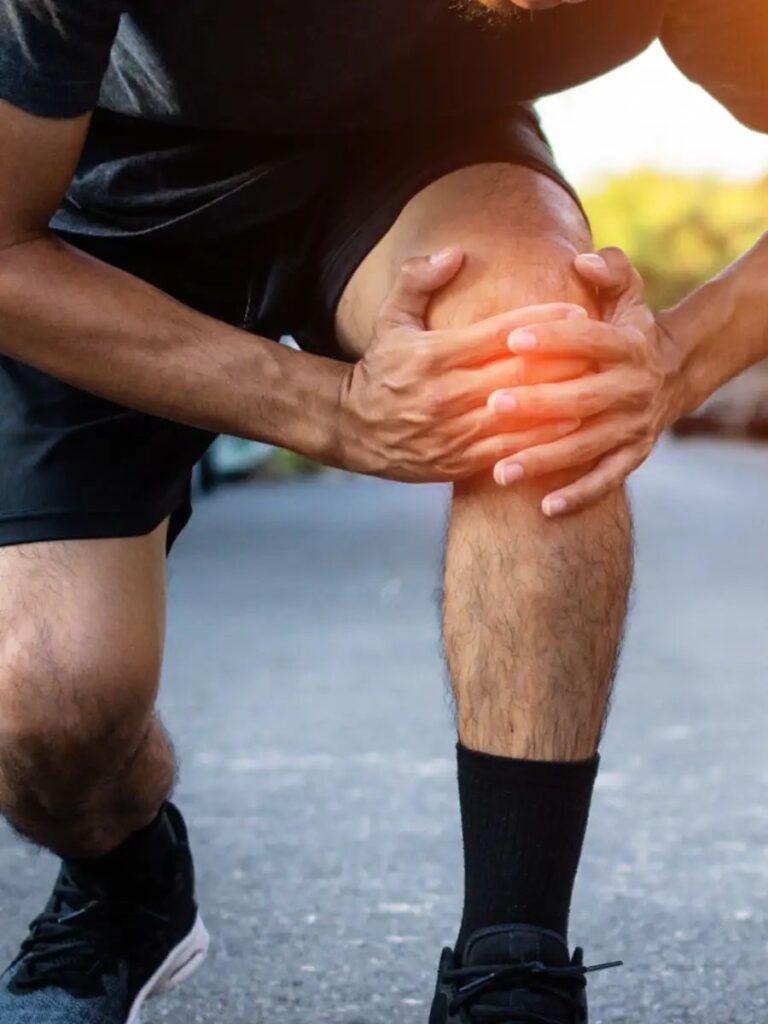
At first, Sameer thought his knee would heal naturally.
During a basketball game, he had twisted awkwardly while landing after a jump. There was immediate pain and slight swelling, but after a few days of rest, the discomfort reduced enough for him to walk normally again.
So he returned to activity.
But something never felt completely right afterward.
While running, his knee occasionally felt weak. During sudden turns, there was a strange sensation that the joint might “slip” or give way. Sometimes the knee felt unstable while using stairs or during gym workouts. Swelling would return after intense activity, but since the pain was not constant, he continued ignoring it.
Like many active individuals, Sameer believed instability was something he could simply “manage.”
Unfortunately, knee instability is often a warning sign that important structures inside the joint may already be injured.
And while the symptoms may appear manageable initially, ligament injuries can continue worsening internally every time the unstable knee experiences repeated stress.
The knee joint depends heavily on ligaments for stability and controlled movement. Ligaments help keep the bones aligned properly during activities like running, jumping, pivoting, squatting, and sudden directional changes.
When one of these ligaments becomes stretched, partially torn, or completely damaged, the knee may lose its natural control and balance.
This instability can feel different for every person.
Some describe it as wobbling.
Others feel the knee “shifting.”
Some experience sudden buckling during movement.
Others simply lose confidence while running or exercising.
Common symptoms often include:
Instability during physical activity.
Swelling after workouts or sports.
Pain while twisting or turning.
Difficulty changing direction quickly.
Reduced confidence during movement.
Clicking sensations inside the knee.
Weakness while climbing stairs.
Many people continue sports or gym activity despite these signs because they assume the discomfort will eventually disappear with time. However, untreated ligament injuries rarely improve properly without guided rehabilitation or appropriate orthopedic care.
Every unstable movement places additional pressure on cartilage, muscles, meniscus tissue, and surrounding joint structures. Over time, repeated instability episodes may increase the risk of long-term cartilage damage, meniscus tears, chronic knee weakness, and early joint degeneration.
In simple words, ignoring knee instability can gradually affect the entire joint, not just the ligament itself.
According to Dr. Saurabh Giri from Helios Orthojoint, early orthopedic evaluation after ligament injuries is extremely important because timely diagnosis and rehabilitation often help prevent severe long-term knee damage.
Importantly, not every ligament injury requires surgery.
Treatment depends on factors like the severity of the tear, the patient’s activity level, age, sports goals, joint stability, and associated injuries. Many mild and moderate ligament injuries improve significantly through physiotherapy, muscle strengthening, rehabilitation exercises, bracing, and activity modification.
However, for individuals experiencing repeated instability, sports-related injuries, or major ligament tears like ACL injuries, procedures such as ACL reconstruction Pune may become necessary to restore proper joint stability and protect long-term knee function.
Modern orthopedic treatment has evolved tremendously over the years.
Advanced arthroscopy surgery Pune now allows minimally invasive treatment using small incisions and highly specialized instruments to repair or reconstruct damaged structures inside the knee joint. These minimally invasive orthopedic techniques help reduce tissue trauma while supporting smoother recovery-focused rehabilitation.
At Helios Orthojoint, sports injury rehabilitation focuses heavily on restoring movement confidence, muscle balance, joint control, and long-term mobility rather than simply reducing temporary pain. Personalized rehabilitation programs are carefully designed according to the patient’s lifestyle, activity demands, and recovery goals.
One of the biggest mistakes active individuals make is returning to sports too early after injury.
Even if pain decreases, the muscles supporting the knee may still remain weak and the ligament may not have healed properly. Without restoring strength, flexibility, balance, and movement stability, the chances of repeated injury remain significantly higher.
Recovery is not only about feeling less pain.
It is about rebuilding trust between the body and movement again.
Beyond physical discomfort, chronic instability also affects emotional wellbeing. Many patients become hesitant during sports activity because they fear sudden twisting movements or re-injury. This fear slowly affects athletic performance, confidence, and overall mobility.
One of the most emotional moments after proper treatment is often simple:
Moving freely again without worrying whether the knee will suddenly give way.
Running naturally.
Jumping confidently.
Turning quickly without hesitation.
Returning to sports safely.
Because for active individuals, stability is not only physical support.
It is confidence in movement itself.
Conclusion
Ignoring knee instability during physical activity can allow ligament injuries and internal joint damage to worsen gradually over time. Early orthopedic diagnosis, proper rehabilitation, and timely treatment can help restore stability, protect long-term joint health, and support a safer return to active lifestyles.
Dr. Saurabh Giri
Helios Orthojoint
Pimple Saudagar, Pune
Website: www.kneereplacementsurgeonpune.com
Phone: +91 9156580303
Timing: Monday to Saturday – 10:00 AM to 09:00 PM
Recent Posts
-
 Ignoring Knee Instability During Physical Activity While Ligament Injuries Continue Worsening Internally
-
 Struggling with Slow Recovery After Sports Injuries While Mobility and Performance Continue Getting Affected.
-
 Still Playing Sports with an ACL Tear While Long-Term Knee Damage Continues Increasing with Every Activity.
-
AVN joint replacement surgery
-
 Why Gym Injuries and Sports Trauma Are Increasing Rapidly Among Young Adults and Fitness Enthusiasts