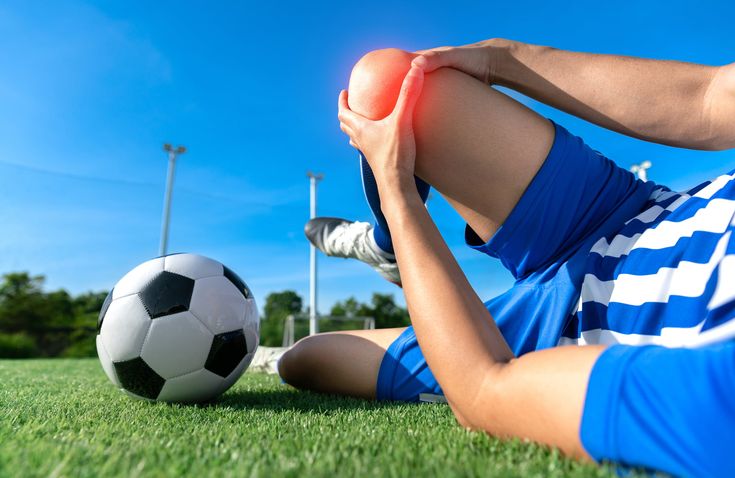
For months after his ankle and knee injury, Karan kept telling himself he would recover “soon.”
At first, the pain felt manageable. A few weeks of rest, some painkillers, and light stretching seemed enough. But every time he tried returning to football or gym training, something felt wrong.
His movements were slower.
The knee felt unstable during quick turns.
Running no longer felt natural.
Even simple workouts started causing swelling and stiffness afterward.
What frustrated him most was not only the physical discomfort.
It was the feeling that his body no longer trusted movement the way it once did.
This emotional struggle is extremely common among athletes, fitness enthusiasts, and active individuals recovering from sports injuries. Many people expect recovery to happen quickly, especially when the swelling reduces or pain becomes less intense. However, true recovery involves far more than temporary pain relief.
Mobility, strength, balance, flexibility, muscle control, and joint stability all need proper restoration before the body can safely return to sports activity.
Unfortunately, many individuals rush back into exercise too early or ignore incomplete healing because they are afraid of losing fitness progress, missing competitions, or slowing down their active lifestyle. This often leads to prolonged recovery, repeated injuries, and long-term joint problems.
Sports injuries can affect multiple structures inside the body.
Ligaments.
Muscles.
Cartilage.
Tendons.
Meniscus.
Bones.
Joint surfaces.
Even after the initial pain improves, weakness and instability may still remain internally. Without proper rehabilitation, the body often compensates by changing movement patterns, placing extra stress on surrounding joints and muscles.
Over time, this can affect both mobility and athletic performance significantly.
According to Dr. Saurabh Giri from Helios Orthojoint,, one of the biggest reasons recovery becomes delayed after sports injuries is incomplete rehabilitation and returning to activity before the joint regains proper strength and stability.
Many active individuals stop treatment once the pain reduces slightly.
But pain reduction alone does not mean full recovery.
Common signs of incomplete sports injury recovery include:
Persistent stiffness after activity.
Joint instability.
Swelling after workouts.
Reduced strength.
Difficulty changing direction quickly.
Pain during jumping or running.
Loss of flexibility.
Fear of movement during sports activity.
These symptoms often indicate that the body still requires rehabilitation and movement correction before returning fully to intense physical activity.
At Helios Orthojoint, sports injury rehabilitation focuses heavily on restoring movement quality and long-term joint health rather than simply helping patients “return quickly.” Personalized recovery programs are designed according to the type of injury, activity level, sport demands, and recovery goals of each individual.
Modern orthopedic care today combines advanced diagnosis, minimally invasive treatment techniques, rehabilitation science, and performance-focused recovery planning to help patients heal more effectively.
Procedures like arthroscopy surgery Pune and ACL reconstruction Pune now allow more precise and minimally invasive treatment for ligament injuries, cartilage damage, and sports trauma. Smaller incisions and muscle-sparing techniques often support smoother recovery and rehabilitation progression.
However, even the most advanced procedures require proper recovery discipline afterward.
Physiotherapy plays a critical role in rebuilding muscle strength, improving joint stability, correcting movement patterns, restoring flexibility, and helping athletes regain confidence during movement again.
One of the biggest emotional challenges after sports injuries is fear.
Fear of re-injury.
Fear of losing performance.
Fear of pushing the body again.
Fear that the joint may never feel “normal” again.
This mental hesitation often affects recovery just as much as the physical injury itself.
That is why recovery-focused orthopedic care now pays attention not only to physical healing but also to movement confidence and psychological readiness before returning to sports activity.
Another important reason recovery becomes slow is poor recovery habits outside therapy sessions.
Sleep deprivation, inadequate nutrition, lack of rest days, overtraining, and returning to intense workouts too early all delay tissue healing significantly. Recovery is not passive.
It is an active part of athletic performance.
The body heals strongest when recovery, rehabilitation, nutrition, and training work together properly.
Importantly, not every sports injury requires surgery.
Many conditions improve significantly through guided rehabilitation, muscle strengthening, physiotherapy, regenerative therapy, and activity modification when diagnosed early. But continuing intense activity while ignoring persistent symptoms can increase long-term joint damage and reduce mobility over time.
One of the most emotional moments athletes often describe after successful recovery is surprisingly simple:
Moving naturally again without fear.
Running confidently.
Jumping freely.
Turning quickly without hesitation.
Trusting the injured joint again.
Because for active individuals, movement is more than exercise.
It represents identity, confidence, freedom, and mental wellbeing.
Conclusion
Slow recovery after sports injuries often happens when rehabilitation remains incomplete or movement stability is not fully restored before returning to activity. Early orthopedic evaluation, proper physiotherapy, and personalized sports rehabilitation can help improve mobility, protect long-term joint health, and support a safer return to peak performance.
Dr. Saurabh Giri
Helios Orthojoint
Pimple Saudagar, Pune
Website:www.kneereplacementsurgeonpune.com
Phone: +91 9156580303
Timing: Monday to Saturday – 10:00 AM to 09:00 PM
Recent Posts
-
 Struggling with Slow Recovery After Sports Injuries While Mobility and Performance Continue Getting Affected.
 -
 Still Playing Sports with an ACL Tear While Long-Term Knee Damage Continues Increasing with Every Activity.
 -
AVN joint replacement surgery
-
 Why Gym Injuries and Sports Trauma Are Increasing Rapidly Among Young Adults and Fitness Enthusiasts
 -
 Ignoring Advanced Surgical Options While Robotic Knee Replacement Continues Becoming the Future of Joint Care