
A few years ago, whenever people heard the words “knee replacement surgery,” they immediately imagined large stitches, severe pain, long hospital stays, and months of difficult recovery.
That fear still exists for many patients today.
When Ramesh was advised to consider surgery for his worsening knee arthritis, he immediately became anxious. He had spent years hearing stories from relatives and neighbors about painful recovery experiences after traditional knee surgery. The thought of being dependent on others for months scared him more than the surgery itself.
So he delayed treatment.
Meanwhile, walking became more painful. Climbing stairs turned exhausting. Sitting comfortably during family gatherings became difficult. Even short trips outside the house started feeling physically draining.
Eventually, during an orthopedic consultation, he learned something that completely changed his perspective.
Modern knee replacement surgery is no longer the same procedure people feared years ago.
The rise of robotic orthopedic procedures is gradually transforming how joint replacement surgeries are performed across the world. Today, many patients and orthopedic surgeons are increasingly preferring robotic-assisted knee replacement because of its precision, personalized planning, and recovery-focused approach compared to traditional manual techniques.
Importantly, robotic surgery does not mean a robot performs the operation independently.
The surgery is still completely controlled by the orthopedic surgeon. Robotic technology simply assists the surgeon with highly accurate planning, implant positioning, and real-time precision during the procedure. (Ortho Bethesda)
In traditional knee replacement surgery, much of the implant alignment and bone preparation depends heavily on manual instruments and surgical judgment during the operation itself. While traditional surgery has successfully helped millions of patients over the years, robotic systems now provide an additional layer of precision and customization.(Gleneagles Hospitals)
One of the biggest reasons robotic knee replacement in Pune is gaining preference is because every knee joint is different.
No two patients have exactly the same anatomy, alignment, bone structure, or movement pattern. Robotic systems create a detailed 3D surgical plan based on the patient’s knee structure, helping surgeons customize the procedure more accurately.
This precision can help improve implant alignment, reduce unnecessary damage to surrounding tissues, and support smoother joint movement after surgery. Studies have shown robotic-assisted knee replacement often provides superior anatomical alignment compared to conventional techniques. (PubMed)
For patients, this often translates into something emotionally important:
Greater confidence during recovery.
Many robotic procedures involve muscle-sparing and minimally invasive orthopedic techniques, which may reduce tissue trauma, swelling, postoperative discomfort, and recovery time compared to older surgical approaches.(Sarvodaya Healthcare)
Patients today are no longer only asking whether surgery can reduce pain.
They want to know:
“How quickly can I walk comfortably again?”
“When can I return to normal life?”
“Will I be able to travel?”
“How soon can I climb stairs confidently?”
“How naturally will the joint move?”
Modern orthopedic care has shifted heavily toward faster recovery after joint replacement and long-term mobility restoration rather than simply replacing damaged joints.
According to Dr. Saurabh Giri from Helios Orthojoint, the focus today is not just surgical success inside the operation theatre but helping patients regain independence and movement confidence in real life.
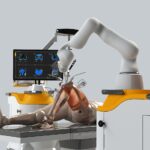
At Helios Orthojoint, advanced technologies like the CUVIS Robotic Knee Replacement System are used to support highly personalized orthopedic treatment. Combined with same-day mobilization protocols, advanced rehabilitation planning, and minimally invasive approaches, treatment is increasingly designed around patient comfort and functional recovery.
This shift is especially important because knee problems today are affecting people much earlier than before. Sedentary lifestyles, obesity, sports injuries, arthritis, ligament damage, and long working hours are contributing to rising joint problems among adults in their 40s and 50s.
Many patients delaying treatment due to fear eventually realize that living with chronic pain impacts life far more deeply than they expected.
Pain changes daily habits quietly.
People stop walking regularly.
Avoid social activities.
Reduce travel.
Gain weight because movement becomes uncomfortable.
Lose confidence while climbing stairs or standing for long periods.
Over time, mobility itself starts shrinking.
This is why modern robotic orthopedic procedures are increasingly being viewed not simply as technological upgrades but as recovery-focused solutions designed around preserving movement, improving comfort, and helping patients return to active lifestyles sooner.
At the same time, it is important to understand that traditional knee replacement surgery still remains an effective and proven procedure in many cases. The right treatment always depends on the patient’s condition, joint damage, anatomy, lifestyle needs, and the surgeon’s expertise. (Gleneagles Hospitals)
The real difference today is that patients now have access to more advanced, personalized, and precision-focused orthopedic care than ever before.
And for many people struggling with chronic knee pain, that evolution is helping surgery feel far less frightening than it once did.
Conclusion
Robotic orthopedic procedures are gradually changing patient expectations from knee surgery by offering greater precision, personalized treatment planning, minimally invasive techniques, and recovery-focused care. Early orthopedic consultation can help patients understand modern treatment options and choose the most suitable path toward pain-free movement and improved quality of life.
Dr. Saurabh Giri
Helios Orthojoint
Pimple Saudagar, Pune
Website: https://www.kneereplacementsurgeonpune.com/
Phone: +91 9156580303
Timing: Monday to Saturday – 10:00 AM to 09:00 PM
Recent Posts
-
 Still Playing Sports with an ACL Tear While Long-Term Knee Damage Continues Increasing with Every Activity.
 -
AVN joint replacement surgery
-
 Why Gym Injuries and Sports Trauma Are Increasing Rapidly Among Young Adults and Fitness Enthusiasts
 -
 Ignoring Advanced Surgical Options While Robotic Knee Replacement Continues Becoming the Future of Joint Care
 -
 Not because the pain was manageable, but because he was afraid of surgery.