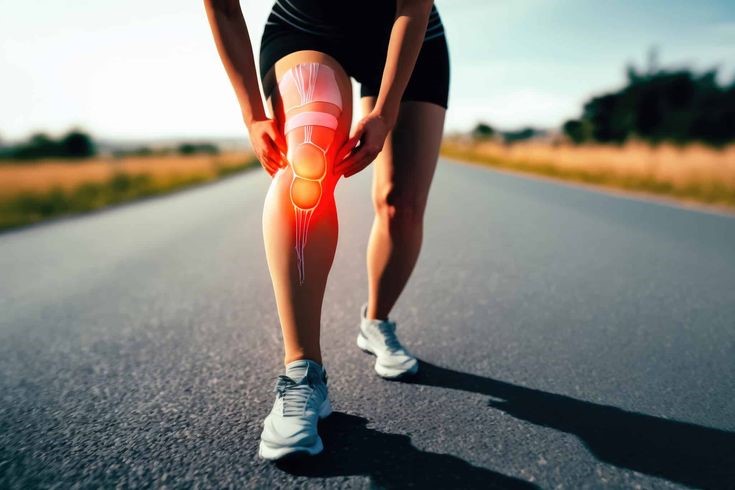
Every morning, Sunita followed the same routine.
Before starting her day, she would quietly take a painkiller with her tea. It had become a habit over the years. At first, the medicine was only for difficult days when her knees hurt after long walks or household work. But slowly, those “difficult days” became almost daily.
The painkiller helped temporarily.
For a few hours, walking felt easier. Climbing stairs became manageable. Standing in the kitchen felt less uncomfortable. But by evening, the stiffness returned again. Some days the swelling felt worse. Other days, getting up from a chair became painful enough to make her pause for a moment before moving.
Still, she avoided visiting an orthopedic specialist.
Like many people, she believed that as long as medicines were controlling the pain, the problem was under control too.
Unfortunately, knee pain does not disappear simply because the discomfort becomes temporarily numb.
Painkillers often reduce symptoms for a short time, but they do not repair damaged cartilage, improve joint alignment, heal ligament injuries, or stop arthritis from progressing internally. While patients continue depending on medication for temporary relief, the actual joint condition may slowly continue worsening underneath.
This is one of the biggest reasons why many individuals eventually reach the clinic only after their mobility becomes severely affected.
Knee joints experience constant pressure throughout daily life. Walking, climbing stairs, standing for long hours, exercising, sitting cross-legged, and maintaining balance all rely heavily on healthy joint function. When cartilage starts wearing down or inflammation develops inside the joint, the body sends warning signs through pain, stiffness, swelling, and restricted movement.
Ignoring these symptoms for long periods while relying only on medicines can gradually lead to advanced joint damage.
Initially, knee pain may only appear during activity. Over time, patients may begin experiencing:
Pain while walking short distances.
Difficulty standing for long periods.
Morning stiffness.
Swelling after routine movement.
Cracking sounds inside the knee.
Difficulty climbing stairs.
Reduced flexibility.
Pain even during rest.
These symptoms are often signs that the joint requires proper orthopedic evaluation instead of repeated temporary relief measures.
According to Dr. Saurabh Giri from Helios Orthojoint, early diagnosis plays an important role in slowing down joint degeneration and preserving mobility before severe damage develops.
Importantly, not every patient with knee pain requires surgery.
This misconception causes unnecessary fear for many people.
In fact, many early and moderate orthopedic conditions can be treated effectively using joint preservation treatment, physiotherapy, regenerative therapy, muscle strengthening exercises, lifestyle correction, weight management, and minimally invasive orthopedic procedures.
The goal is always to preserve the natural joint whenever possible.
However, when severe arthritis, cartilage loss, or untreated joint degeneration progresses over several years, patients may eventually require advanced orthopedic surgery to restore comfortable movement and independence.
Today, modern robotic knee replacement in Pune has transformed the way joint replacement procedures are performed. Advanced systems like the CUVIS Robotic Knee Replacement System allow improved precision, muscle-sparing techniques, and more accurate alignment designed to support smoother movement and faster recovery after joint replacement.
Many patients who once feared surgery are surprised to learn how recovery-focused modern orthopedic care has become.
Same-day mobilization protocols, minimally invasive surgery techniques, personalized rehabilitation programs, and improved pain management now help patients regain mobility far more comfortably than older treatment approaches.
At Helios Orthojoint, treatment focuses not simply on suppressing pain temporarily but on understanding the actual root cause of joint problems. Whether the condition involves arthritis, sports injuries, ligament tears, cartilage damage, or long-term wear and tear, the goal remains restoring movement confidence and improving quality of life.
For younger individuals and active adults, depending continuously on painkillers can sometimes delay treatment for sports injuries or ligament instability that may worsen over time. Untreated ACL injuries, meniscus tears, or cartilage damage can gradually place abnormal stress on the knee joint and accelerate degeneration much earlier in life.
This is why persistent knee pain should never be normalized.
Pain is information.
It is the body’s way of signaling that something inside the joint needs attention.
One of the biggest emotional differences patients notice after proper orthopedic treatment is the freedom that returns with movement. Walking without hesitation. Standing comfortably during family functions. Traveling without fear of pain. Sleeping peacefully. Returning to exercise or morning walks.
These small everyday moments often matter more than people realize until pain starts taking them away.
Temporary relief may feel convenient in the moment, but protecting long-term joint health requires understanding the actual problem early.
Conclusion
If knee pain continues returning despite regular painkiller use, it may be a sign that the underlying joint condition is gradually progressing. Early orthopedic consultation can help identify the cause, preserve mobility, and prevent severe long-term joint damage.
Dr. Saurabh Giri
Helios Orthojoint
Pimple Saudagar, Pune
Website: www.kneereplacementsurgeonpune.com
Phone: +91 9156580303
Timing: Monday to Saturday – 10:00 AM to 09:00 PM
Recent Posts
-
 Still Playing Sports with an ACL Tear While Long-Term Knee Damage Continues Increasing with Every Activity.
 -
AVN joint replacement surgery
-
 Why Gym Injuries and Sports Trauma Are Increasing Rapidly Among Young Adults and Fitness Enthusiasts
 -
 Ignoring Advanced Surgical Options While Robotic Knee Replacement Continues Becoming the Future of Joint Care
 -
 Not because the pain was manageable, but because he was afraid of surgery.