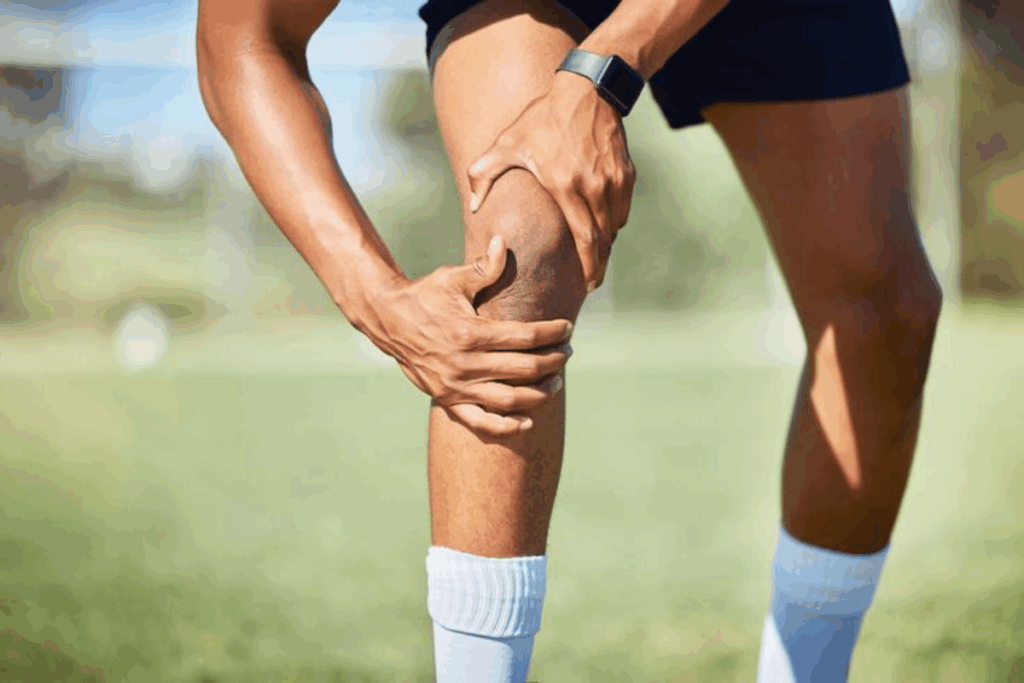
The ACL plays a crucial role in stabilizing the knee during activities that involve quick direction changes, sudden stops, or pivoting motions. Due to its important function, it is one of the most frequently damaged ligaments, and that’s mainly among athletes and the physically active. ACL injury may be painful, restrict motion, and, unless appropriately treated, cause long-term consequences.
If the ACL is ruptured or badly injured, it usually won’t heal itself. Surgical repair is then required to regain normal function and stability of the knee. The ACL is essential for maintaining knee stability during abrupt movements like pivoting, stopping suddenly, or changing direction quickly.
Repair vs. Reconstruction: What’s the Difference?
ACL repair is typically done in certain instances, typically when the ligament has pulled away from the bone but is still intact and healthy for the most part. In these instances, the doctor might be able to reattach the ligament with sutures or anchors. This is less typical and is often reserved for partial tears or pediatric patients.
Increasingly, surgeons perform ACL reconstruction. It is a process of excising the torn ligament and substituting it with a graft. The graft can be sourced from the patient’s own tissue (an autograft, often from the hamstring or patellar tendon) or from another individual (an allograft). Reconstruction is more stable in the long term and is the standard treatment for maintaining knee function, especially among those who are physically active.
When Is Surgery Required?
Not every ACL injury needs surgery. In certain instances of mild sprain or partial rupture, physical therapy and wearing a knee brace can suffice. Surgery becomes necessary, though, when the ACL is completely ruptured, the patient continues to have knee instability, or when the individual wants to resume high-impact activities. Furthermore, if other concomitant injuries like meniscus tears or cartilage injuries are present, surgery tends to be the way to go.
Orthopedic physicians usually employ MRI scans and physical exams to establish the degree of injury and to design the best course of treatment. Surgery is usually recommended for younger, athletic individuals or anyone whose lifestyle is impacted by knee joint instability.
What Recovery Looks Like
Recovery after ACL surgery is a progressive process and demands commitment to a formal rehabilitation regimen. During the first few weeks post-surgery, rest, ice, elevation, and compression are essential in managing swelling and pain. Patients are generally fitted with a knee brace and possibly crutches to restrict weight-bearing while they start gentle movement exercises to avoid stiffness.
As recovery continues over the next few months, rehabilitation involves strengthening the muscles surrounding the knee, enhancing flexibility, and regaining balance and coordination. By the third month, patients usually start low-impact exercise like stationary cycling, jogging, or agility drills. Complete return to sports or high-impact activities is generally achievable between six and nine months post-surgery, depending on individual recovery and physiotherapy adherence.
Long-Term Benefits of Surgery
ACL repair or reconstruction not only restores stability and function to the knee but also plays a crucial role in preventing future complications. Untreated or poorly managed ACL injuries can cause recurrent knee injury or premature onset of arthritis. Thanks to advanced surgical methods, especially minimally invasive arthroscopy, patients now enjoy smaller cuts, shorter convalescence, and less post-operative pain.
More significantly, though, those subjected to prompt operation and a determined rehabilitation regimen in many cases make it back to their preferred stage of physical capability—whether this is competitive sport, gym class, or plain walking without damage or apprehension of instability.
Summary
ACL injuries are not only physically limiting but can also impact your confidence and lifestyle. Fortunately, with expert surgical care and a patient-specific recovery plan, it is entirely possible to regain strength, movement, and stability.
If you have an ACL injury or chronic knee instability, professional assistance is at hand. Dr. Saurabh Giri, distinguished orthopedic and joint replacement specialist at Helios Orthojoint Clinic, Pune, provides state-of-the-art ACL reconstruction and individualized attention to return you to your normal routine.
Book your appointment today and take the first step towards a stronger, pain-free future.
Recent Posts
-
 Still Playing Sports with an ACL Tear While Long-Term Knee Damage Continues Increasing with Every Activity.
 -
AVN joint replacement surgery
-
 Why Gym Injuries and Sports Trauma Are Increasing Rapidly Among Young Adults and Fitness Enthusiasts
 -
 Ignoring Advanced Surgical Options While Robotic Knee Replacement Continues Becoming the Future of Joint Care
 -
 Not because the pain was manageable, but because he was afraid of surgery.